




Programmes for transnational and cross-border cooperation (Interreg) They are a suitable instrument for financing collaborative partnership projects between organizations from Bulgaria and neighboring or broader European regions. They are not standard grants for a single company or organization, but support cooperation between partners working on a common problem, a shared territory, or a regional challenge.
That is exactly what makes them interesting. In Interreg projects, a good idea alone is usually not enough. It needs partners, territorial logic, a clear distribution of roles, and a result that is useful for more than one organization or more than one country. That is why these programs are particularly suitable for participants seeking not just funding but international partnership, the exchange of experience, pilot solutions, common services, or long-term positioning in a regional network.
What is European Territorial Cooperation?
European territorial cooperation is part of the European Union’s cohesion policy. The more familiar name for these programs is Interreg. They finance joint projects between organizations from different countries, regions, or territories that have common needs and seek common solutions.
At the European level, Interreg 2021–2027 covers dozens of programs with a total budget of about 10 billion euros, but each program has its own territorial scope, priorities, eligible candidates, budget, and invitation schedule.
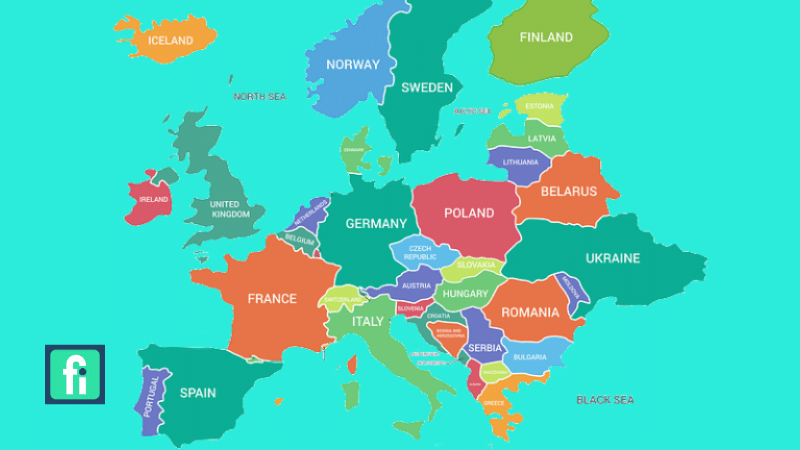
The cross-border programs, transnational programs, and interregional programs are most often relevant for Bulgarian organizations.
Who is it suitable for?
Interreg programs are suitable for a wide range of organizations, with the most commonly eligible ones being:
- municipalities, regional administrations and other public bodies;
- state institutions and public law organizations;
- associations, chambers of commerce, sectoral organizations and structures in support of business;
- universities, schools, scientific and research organizations;
- cultural institutions, museums, libraries, chitalishti and organizations in the field of cultural heritage;
- non-governmental organizations, foundations, associations and sports organizations;
- small and medium-sized enterprises, when the specific invitation is open to them.
The key condition is that the organization falls within the allowable territorial scope of the respective program. In the case of cross-border programs, this usually means a headquarters or activity in specific areas on both sides of the border.
In transnational and interregional programs, the territorial scope is broader, but again it is determined by the rules of the specific program.
What projects are funded
Interreg programs finance partnership projects that have a common logic and solve problems important to a given territory or group of regions. The topics can be very diverse: environment, climate, water management, tourism, cultural heritage, transport, education, social services, digitalization, innovation, entrepreneurship, risk management, administrative capacity, and others.
Projects can include exchange of experience, joint analyses, training, pilot activities, development of methodologies, creation of services, small infrastructure under certain conditions, promotional activities, events, digital solutions or demonstrations.
In some programs there are also special invitations for small and medium-sized enterprises, Including for technological development, modernization, digitalization, green solutions or joint business initiatives.
It is important, however, to understand that these are not programs of purely individual interest. A project to purchase equipment for just one company, the construction of a production building, the renovation of an office, or standard marketing activities are generally not suitable for Interreg, unless a specific call explicitly provides for such type of support. The added value of cooperation lies at the heart of these programs.
Which Interreg programs Bulgaria participates in during the period 2021–2027
Bulgaria participates in several groups of programs for European territorial cooperation.
Cross-border programs
Cross-border programs are aimed at cooperation between border regions of Bulgaria and neighboring countries. Usually, organizations from pre-determined areas on both sides of the border can participate in them.
- Interreg VI-A Romania – Bulgaria 2021–2027 – the areas of Vidin, Montana, Vratsa, Pleven, Veliko Tarnovo, Rousse, Silistra and Dobrich are eligible from the Bulgarian side, together with the corresponding Romanian districts in the cross-border region.
- Interreg VI-A Greece – Bulgaria 2021–2027 – the areas of Blagoevgrad, Haskovo, Smolyan and Kardjali are eligible from the Bulgarian side, along with the corresponding Greek regions in the cross-border region.
- Interreg VI-A IPA Bulgaria – Serbia 2021–2027 – the regions of Vidin, Montana, Vratsa, Sofia region, Pernik and Kyustendil are eligible from the Bulgarian side. The program is financed under the Instrument for Pre-Accession Assistance.
- Interreg VI-A IPA Bulgaria – Turkey 2021–2027 – the Bulgarian side allows the regions of Burgas, Yambol and Haskovo, along with the neighboring territories from Turkey.
- Interreg VI-A IPA Bulgaria – North Macedonia 2021–2027 – the areas of Blagoevgrad and Kyustendil are eligible from the Bulgarian side. The program is also funded through pre-accession support.
Transnational programs
Transnational programs cover larger geographical areas and support partnerships between organizations from more than one country. In them, the topics often relate to common macroregional challenges – for example, the Danube Region, the Mediterranean, or the Black Sea Basin.
- Danube Region Programme 2021–2027 – supports joint solutions to common challenges in the Danube region. The entire territory of Bulgaria is eligible.
- Interreg Euro-MED 2021–2027 – It is aimed at cooperation in the Euro-Mediterranean region. The entire territory of Bulgaria is eligible.
- Interreg NEXT Black Sea Basin 2021–2027 – supports cooperation in the Black Sea basin. On the Bulgarian side, the eligible areas are Varna, Dobrich, Targovishte, Shumen, Burgas, Sliven, Yambol and Stara Zagora.
Interregional programs
Interregional programs have a broader European scope. They are particularly suitable for public authorities, institutions, organizations supporting policies, research structures, and partners working to improve regional policies, exchange of good practices, and institutional capacity. All of Bulgaria’s territory is eligible for these programs.
- Interreg Europe 2021–2027 – supports the exchange of experience and the improvement of regional policies.
- URBACT IV 2021–2027 – It is focused on urban development, networks of cities and integrated urban policies.
- ESPON 2030 – provides territorial analyses, data and knowledge to support policies.
- INTERACT IV 2021–2027 – supports the capacity and coordination of territorial cooperation programs.
Why partnership is crucial
In Interreg, partnership is not a formality. The project must show why the problem cannot be solved as well by just one organization or only in one country. A good Interreg project usually has a clear common challenge, partners with real roles, activities from both or more countries on the territory, and results that can be used beyond the individual participant.
Therefore, preparation often begins long before the actual invitation itself. The most important factors are the right partners, a sufficiently clear project idea, knowledge of the program’s priorities, and a realistic assessment of what can be accomplished within the budget and timeframe.
What comes after 2027?.
By 2026, the 2021–2027 programming period is already in its late stage. Some of the calls have already been completed, others are already in progress.
In parallel, the European conversation on the future of Interreg after 2027 has begun. The European Commission is conducting a consultation process on the future rules and priorities of European territorial cooperation, including with the organizations and citizens from the border regions.
In Bulgaria, the process of discussing and pre-collecting project ideas also took place through the Ministry of Regional Development and Public Works, which is responsible for the Interreg programs, including through regional consultations in the border regions and meetings with stakeholders. This means that organizations that are interested in Interreg should already be thinking not only about the latest calls from the current period, but also about positioning themselves for the next one.