





ПIt is planned to be opened in 2025 The long-awaited procedure, which will support small and medium-sized businesses in our country in their digital transformation – „Introduction of technologies from the field of Industry 4.0 in enterprises“.
In the modern world, the concept Industry 4.0 refers to the new era in production, which generally unites automation, digitalization и „smart“ technologies.
But what does this mean in practice? How can a company implement these principles and become more competitive?
What is Industry 4.0?
Industry 4.0 brings together a wide range of technologies that transform traditional production processes into intelligent and connected systems. Among the key technologies it involves are:
- Robotics and automation: Intelligent machines that work independently or in coordination with humans.
- Internet of Things (IoT): Connecting devices and machines that exchange data in real time.
- Artificial Intelligence (AI): Use of algorithms for analysis and automation of processes.
- Cloud Computing: Storage and processing of data in the cloud for easier access and scalability.
- Digital Twins: Virtual copies of physical objects for simulation and optimization.
- Big Data Analytics: Processing and analysis of large volumes of information for making informed decisions.
- 3D printing: Additive manufacturing for rapid prototyping and product customization.
- Cybersecurity: Data protection and systems against cyberattacks.
Examples of implementing Industry 4.0 in practice
-
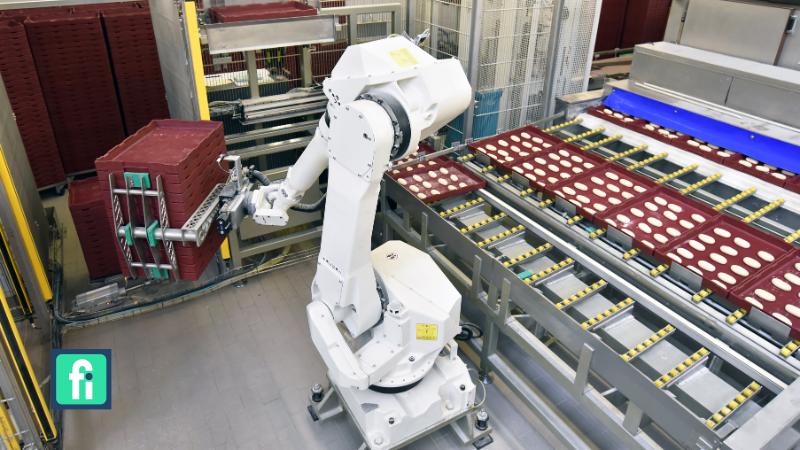
Robotized factory
A car parts factory is deploying IoT devices that monitor the production process in real time. The sensors register the temperature and vibrations of the machines, and the data is analyzed using artificial intelligence. This enables predictive maintenance, which reduces equipment downtime by 30%.
- Solar panels with a digital twin
An energy company creates a digital twin of a solar farm that simulates the system's operation under various conditions. Through analyses of weather and performance data, the company optimizes energy production and increases efficiency by 15%.
- Protection against flooding
An engineering firm is installing IoT sensors to monitor water levels in real time in at-risk areas. The data is processed by a cloud platform that alerts local authorities when there is a risk of flooding. The system shortens the response time and minimizes damage.
- Automated greenhouse
A farm implements an automated greenhouse management system that uses sensors for temperature, humidity, and light. The system automatically adjusts the irrigation and lighting, resulting in 20% lower resource costs and higher yields.
Why is it necessary?
Industry 4.0 gives companies the opportunity to remain competitive in a global environment where efficiency and innovation are key factors for success.
Companies that integrate technologies such as IoT, artificial intelligence, and automation can:
- To reduce costs: Optimizing processes and reducing losses lead to significant savings.
- To improve the quality: Monitoring and analysis technologies allow for more accurate production and minimize defects.
- To accelerate innovation: Data collected in real time facilitate the development of new products and services.
Companies can more easily respond to changing market requirements by adapting their processes in real time. This is crucial in sectors such as automotive, food industry, electronics, medicine and pharmacy, among others, where product customization is becoming increasingly important.
The integration of green technologies, such as energy management and waste reduction, makes business not only more environmentally friendly but also more attractive to customers and partners.
What is good to know?
A company cannot achieve „maturity“ in Industry 4.0 from today to tomorrow; this is a long-term process and requires careful planning. Of course, each individual solution has its own contribution, but the effect is many times greater if it is implemented in sequential steps.
The digitization process for a company or other organization is gradual and goes through several stages. six basic levels of maturity (See also Index of maturity):
- Computerization (Computerization):
- The foundation for digitalization.
- Technologies are based on computers, and companies are starting to digitalize their core processes.
- There is still low connectivity between the individual systems.
- Connectivity (Connectivity):
- Systems and machines begin to connect through networks (intranet, internet).
- The information is collected, but there is no integration between different components.
- Often, IoT infrastructures are built at this stage.
- Visibility:
- The data generated by the connected systems becomes visible in real time.
- Technologies such as sensors, IoT platforms, and databases are used.
- Organizations can monitor their processes, but they still do not analyze this data in depth.
- Transparency (Transparency):
- The data are analyzed and interpreted to obtain a better understanding of the status of the operations.
- At this stage, analytical tools are used that allow for predictive analysis and process modeling.
- Preparation for a higher level of automation.
- Predictive Capacity:
- The systems can predict events based on analysis of historical data and machine learning.
- An application of artificial intelligence for process management and optimization.
- Companies are starting to react proactively to problems.
- Adaptability:
- The highest level of maturity.
- Intelligent, self-governing systems that make autonomous decisions.
- The processes are fully optimized and companies can react in real time to external changes and requirements.
How is the maturity model applied?
The levels of maturity represent a logical and natural progression. Failing a level can lead to problems such as a lack of integration between systems or an inability to use the collected data effectively. For example, without connectivity (level 2) the company cannot achieve it visibility (level 3) and Transparency (level 4).
An example of the process being applied consistently in a food and beverage manufacturing plant.
Why a structured approach?
The benefits are obvious for any company owner or investment manager:
- Optimizing investments: A clear plan helps to avoid unnecessary or overly large investments that do not meet the current needs of the company.
- Higher efficiency: The sequential progression through the levels ensures that each step builds upon the previous one, which increases the effectiveness of the digital transformation.
- Minimizing risks: Analysis and planning reduce the risk of technical and organizational problems, such as resistance from employees or incompatibilities between systems.
Before making any investments, it is necessary to determine the current level of maturity of the company and a full technological audit. This includes an assessment of existing technologies, infrastructure, staff skills, and business processes. A plan is prepared. The plan must define key objectives, priorities, and steps to achieve a higher level of maturity, taking into account the specifics of the industry and the needs of the company.
An experienced consultant who works alongside the company's technical team can conduct an objective analysis and offer a customized strategy. The consultant can also help select appropriate technologies and providers.
An exemplary process would include:
Stage 1 – Evaluation: An analysis of the current state is performed and gaps are identified.
Stage 2 – Strategy: A long-term plan is prepared with intermediate goals for each level of maturity.
Stage 3 – Implementation: The investments are made in stages, monitoring progress and making adjustments.
Stage 4 – Training: The staff is preparing to work with the new technologies.
A company that consistently follows maturity levels and has a well-structured plan developed with the help of experienced experts has a significantly greater chance of successfully transforming and extracting maximum benefits from Industry 4.0. This is not only recommended but also crucial for the company's sustainable growth.
***
Industry 4.0 is not just the future of manufacturing; it is also the present for companies that want to remain competitive. Using maturity models and implementing practical technologies are the key to success in this transformation.
Follow us for more useful articles and current topics!